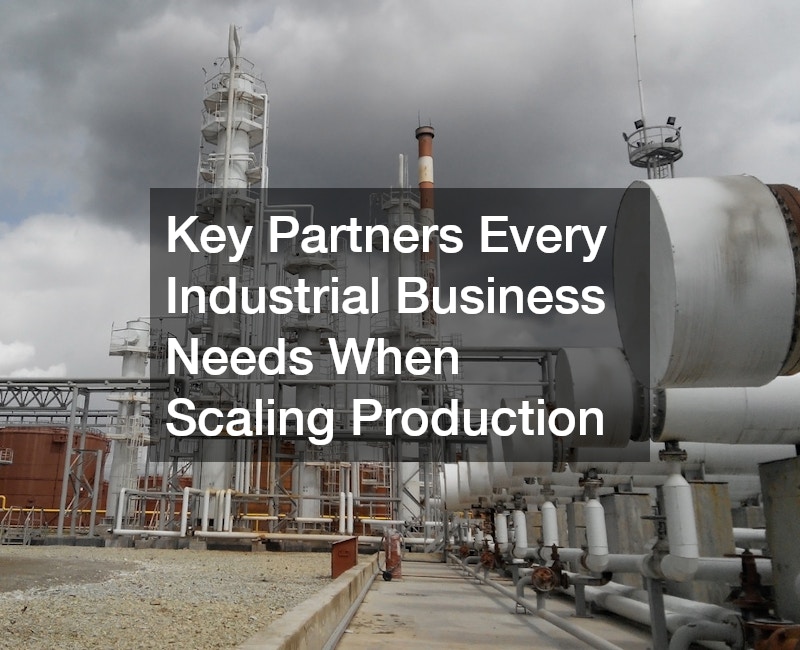
Scaling an industrial production line is a complex journey that tests the operational limits of any enterprise. When demand accelerates, growing companies frequently encounter bottlenecks in physical floor space, machinery throughput, raw material supply, and specialized labor. Overcoming these hurdles requires far more than simply increasing capital expenditures or running additional shifts on the factory floor. It demands a robust ecosystem of specialized external partners capable of extending your operational capabilities without bloating your internal overhead.
Building a dependable network of external experts allows growing industrial firms to remain agile while managing financial risk. Rather than trying to master every auxiliary discipline internally, market leaders focus their core teams on proprietary technology, product design, and key commercial relationships. The supporting infrastructure is then entrusted to proven service providers who specialize in heavy industrial disciplines. This strategy enables businesses to ramp up production volume efficiently while preserving capital and maintaining high quality standards across every production cycle.
Navigating Regulatory Compliance and Commercial Contracts

Protect Intellectual Property and Corporate Structure During Expansion
Expanding operational footprint inevitably brings heightened legal exposure, complex supply chain agreements, and intricate corporate structuring challenges. Scaling companies must formalize vendor relationships, protect trade secrets, and structure joint ventures or licensing agreements with bulletproof precision. Engaging a seasoned corporate attorney ensures that your growth is built on a solid legal foundation, shielding the organization from potential liability, patent disputes, and regulatory infractions. A legal advisor with expertise in the manufacturing sector provides invaluable counsel during contract negotiations with international suppliers and heavy equipment vendors, ensuring that terms are balanced and risks are properly mitigated.
Structure Supplier Agreements to Mitigate Supply Chain Disruptions
-
Draft comprehensive service level agreements that mandate clear quality benchmarks, output timelines, and penalties for non-performance.
-
Include explicit indemnification clauses to protect your firm against liability resulting from third-party vendor errors or component failures.
-
Establish clear intellectual property assignment terms for custom tooling, fixtures, or machinery developed jointly with external vendors.
-
Review local and national environmental compliance guidelines before finalizing factory expansions or leased facilities.
Expanding Capacity Without Expanding Capital Overhead
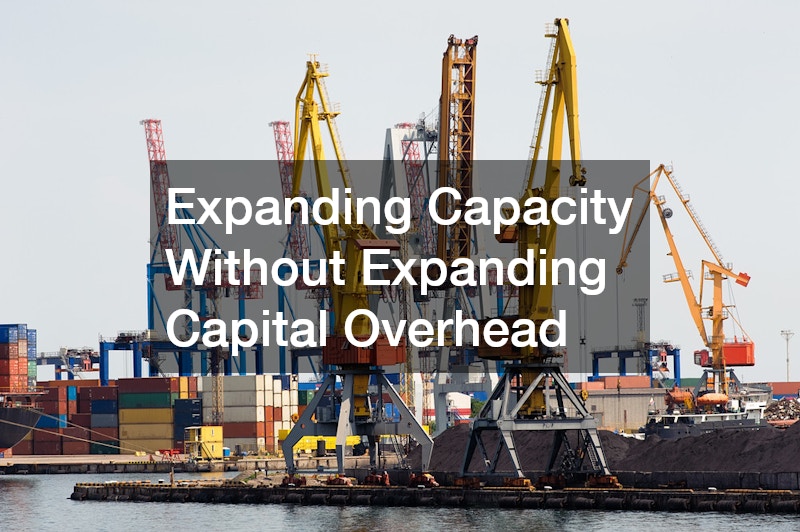
Outsource Secondary Operations to Maintain Focus on Core Competencies
When internal shop floors reach maximum capacity, capital investment in new buildings or machinery may not always be the fastest or most cost-effective solution. Leveraging contract manufacturing allows growing enterprises to offload full product assemblies or specialized components to specialized external facilities. This strategy turns fixed capital costs into flexible variable expenses, giving businesses the agility to adapt to fluctuating market demand without overextending their balance sheets. Partnering with established production vendors also grants immediate access to certified quality management systems and skilled machine operators without months of expensive recruitment and training.
Leverage Precision Processing for Specialized Structural Components
Choose Suppliers with Modern Machining and Prototyping Infrastructure
-
Audit prospective outsourcing partners to confirm they possess current quality certifications relevant to your industry vertical.
-
Request comprehensive operational workflow documentation to evaluate their process consistency and quality assurance protocols.
-
Validate that third-party facilities have adequate physical storage and climate controls for your raw materials and finished goods.
-
Establish dedicated communication channels between engineering teams to streamline design changes and rapid prototyping efforts.
Beyond complete component assembly, scaling operations often demand custom structural frames, specialized enclosures, or heavy metal brackets. External fabrication services provide the raw material cutting, bending, forming, and welding required to build robust equipment housing and floor infrastructure. By utilizing dedicated external metalworking specialists, industrial firms can acquire high-precision structural elements tailored to their exact floor configurations without investing in expensive lasers, press brakes, or manual welding bays.
Thermal Processing and Metallurgy Optimization
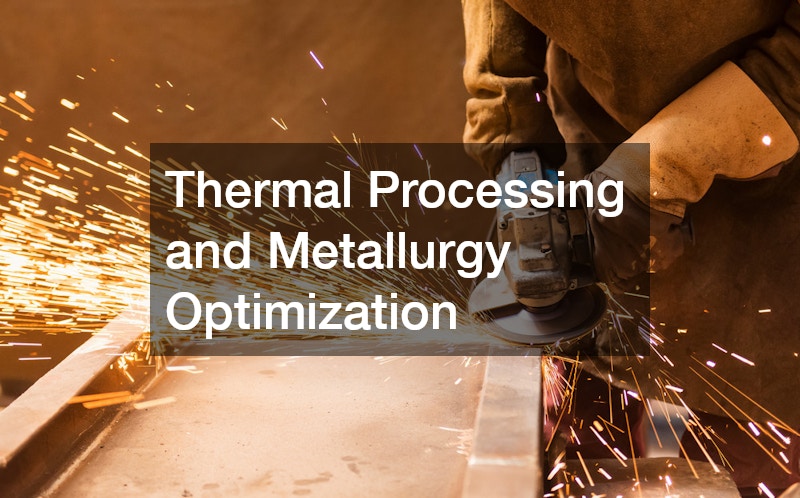
Enhance Component Durability with Precision Thermal Processing
Industrial components operating under high stress, friction, or extreme environments require enhanced mechanical properties to prevent premature structural failure. Integrating specialized heat treatments into your manufacturing supply chain ensures that gears, shafts, fasteners, and structural components achieve the exact hardness, tensile strength, and fatigue resistance required for heavy-duty operational cycles. Partnering with certified thermal processing specialists allows engineering teams to optimize material characteristics without maintaining energy-intensive furnaces or hazardous quenching facilities on site.
Implement Standardized Quality Testing for Material Integrity
-
Define specific metallurgical specifications and material grade requirements before submitting components for thermal processing.
-
Require lot-by-lot mill test reports and hardness testing certificates to verify process repeatability across production runs.
-
Coordinate transport logistics to minimize lead times between machining, thermal treatment, and final finishing operations.
-
Work closely with metallurgists to select the correct process parameters, whether stress relieving, hardening, or annealing, for each application.
Heavy Equipment Logistics and Machinery Installation
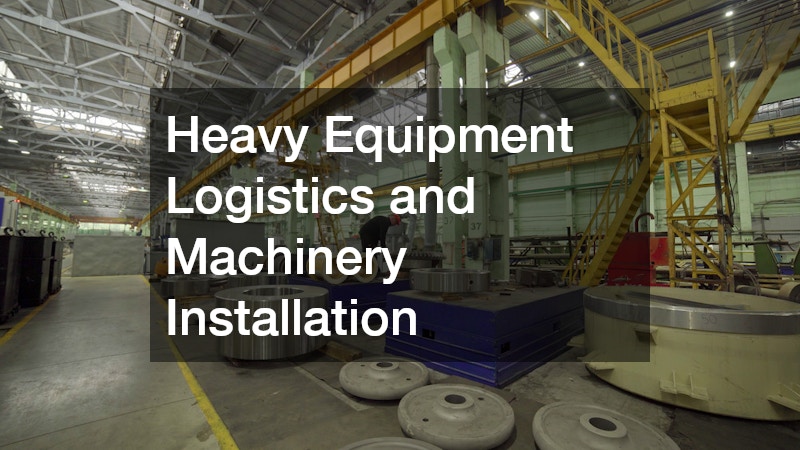
Plan Heavy Equipment Rigging to Prevent Production Downtime
Installing new manufacturing lines or reconfiguring existing floor layouts involves handling massive, high-value machinery that cannot be moved using standard forklifts or basic plant equipment. Professional industrial rigging services bring the specialized hydraulic gantries, cranes, precision jacks, and experienced crews necessary to move, position, and anchor heavy assets safely. Utilizing certified movers prevents costly equipment damage, protects plant personnel from severe safety hazards, and ensures that delicate internal machinery alignments are maintained throughout the relocation process.
Establish Safety Protocols During Machinery Moves and Placement
-
Conduct thorough structural floor load assessments before transferring heavy machinery onto factory floors.
-
Schedule major machinery installation during scheduled maintenance windows to minimize disruption to ongoing production lines.
-
Verify that all heavy-lifting vendors hold comprehensive commercial liability and cargo insurance coverage before work begins.
-
Develop detailed rigging plans that outline exact pick points, center-of-gravity calculations, and pathway clearances within the plant.
Implementing Advanced Automation and Industry Standards
Integrate Smart Automation Systems to Maximize Throughput
Modern industrial scaling relies heavily on automated assembly systems, robotic material handling, and intelligent data gathering across the plant floor. Engaging with advanced manufacturing companies gives growing businesses access to cutting-edge robotics, machine vision inspection systems, and integrated software platforms that dramatically boost productivity. These specialized automation partners help transition legacy manual processes into streamlined, highly efficient smart factory workflows that reduce cycle times and lower defect rates.
Systematically Upgrading Production Infrastructure
-
Map out current manufacturing bottlenecks to identify where automated inspection or robotic handling will yield the highest return on investment.
-
Standardize communication protocols across existing equipment to ensure seamless integration with new industrial internet systems.
-
Invest in comprehensive employee training programs to upskill shop floor technicians on operating and troubleshooting automated cells.
-
Design modular automation frameworks that allow for incremental upgrades as production volumes expand over time.
Power Infrastructure and Emergency Continuity
Secure Reliable Emergency Power to Protect Sensitive Processing Equipment
Scaling up production inevitably increases total power draw, placing continuous demand on plant utility systems. Unplanned power outages or electrical brownouts can cause severe production losses, damage high-value CNC machinery, and ruin batch runs of temperature-sensitive materials. Maintaining industrial diesel generators provides vital backup power infrastructure, ensuring that critical machinery, safety systems, and process controls remain functional during electrical grid interruptions. Having dedicated prime or backup power partners ensures proper generator sizing, fuel management, and rapid emergency dispatch services.
Maintain Contingency Energy Plans for Continuous Operations
-
Calculate the peak starting current and continuous electrical load of all mission-critical equipment to size backup power systems properly.
-
Establish automatic transfer switches that initiate emergency power within seconds of a utility grid failure.
-
Create standing supply agreements with fuel delivery vendors to guarantee fuel availability during extended local power outages.
-
Perform monthly load-bank testing to confirm generator readiness and identify potential mechanical or electrical issues before emergency situations occur.
Reliability Engineering and Asset Health Monitoring
Monitor Asset Health Through Rigorous Baseline Assessments
Unplanned machinery failure is one of the most expensive obstacles to scaling an industrial business. Operating high-speed production lines without continuous health monitoring drastically increases the risk of catastrophic mechanical breakdowns. Professional condition assessments utilize non-destructive testing, vibration analysis, thermography, and oil diagnostics to evaluate the health of critical production assets. Identifying minor wear pattern anomalies before they result in functional failures allows maintenance teams to schedule repairs proactively during planned shutdowns.
Partner with Fluid Dynamics Specialists to Maintain Continuous Operations
Execute Preventative Maintenance Programs across Facility Systems
-
Establish baseline operational metrics for all critical machinery when equipment is newly installed and running at peak performance.
-
Schedule routine oil analysis and acoustic monitoring to detect bearing wear, gear misalignment, or lubrication degradation early.
-
Maintain a digitized inventory of essential spare parts based on the failure probability data gathered during physical inspections.
-
Track mean time between failures across all primary production lines to evaluate equipment reliability trends and vendor build quality.
Fluid movement is central to many industrial processes, ranging from coolant distribution in heavy machining cells to chemical processing and wastewater handling. Reliable industrial pump services ensure that high-volume pumping systems operate at peak efficiency with minimal fluid slippage or unexpected downtime. Specialized pump vendors provide ongoing dynamic balancing, impeller overhaul, seal replacement, and energy optimization services that keep fluid handling networks running smoothly under demanding continuous-duty schedules.
Sustainable Waste Management and Scrap Logistics
Optimize Metal Scrap Recycling to Generate Revenue from Waste
Scaling production volume directly increases the generation of raw material scrap, turnings, and off-cuts. Managing this material waste effectively requires structured scrap logistics programs that prevent shop floor clutter while recovering financial value from off-spec metal. Working with steel recycling companies provides industrial facilities with custom roll-off containers, scheduled scrap pickups, and transparent, market-indexed pricing for ferrous and non-ferrous manufacturing waste. Converting material waste streams into consistent revenue offsets raw material procurement costs while supporting corporate sustainability goals.
Implement Circular Economy Practices Across Factory Operations
-
Segregate different alloys and metals at the point of generation to maximize scrap market value and eliminate cross-contamination.
-
Install chip compactors or briquetting systems to reclaim valuable cutting fluids and compress metal turnings for easier transport.
-
Audit scrap recycling vendors to ensure compliance with environmental regulations and proper material chain-of-custody tracking.
-
Utilize dedicated scrap collection bins with clear signage across production floors to maintain clean, organized, and safe work areas.
Building Strategic Alignment Across Your Industrial Partner Ecosystem
Define Metrics to Track External Vendor Performance
A successful scaling strategy relies on viewing external service providers as long-term strategic partners rather than simple transactional suppliers. Establishing transparent key performance indicators helps monitor vendor accountability, delivery punctuality, and output consistency across all operational touchpoints. Regular performance reviews create opportunities to address small operational friction points before they disrupt overall plant productivity, ensuring that every partner remains aligned with your corporate growth trajectory.
Foster Long-Term Collaboration and Open Communication
Ensure High Operational Standards Through Cross-Functional Audits
-
Establish joint planning sessions with key suppliers to share six-month and twelve-month production forecasts.
-
Create standardized scorecards that evaluate vendor quality rates, on-time delivery percentages, and response speeds to engineering changes.
-
Reward high-performing vendors with long-term contracts to secure capacity reservations during peak market demand cycles.
-
Maintain clear escalation paths for urgent technical issues or unexpected material shortages across all supply agreements.
Optimizing Facility Logistics and Worksite Flow
Managing the movement of raw materials and finished goods within an expanding facility requires continuous optimization of internal logistics systems. Rapidly growing production lines can easily clog aisles, congest loading docks, and stall material handlers if internal transport routes are poorly configured. Working with industrial logistics specialists allows manufacturing leaders to redesign traffic lanes, implement automated guided vehicles, and streamline storage staging areas. By eliminating physical bottlenecks and reducing material transfer times between processing stations, plants achieve faster throughput and minimize product handling damage without expanding their total facility footprint.
Cultivating High-Performance Technical Talent Chains
Sustaining rapid operational expansion requires a steady stream of highly skilled technicians, engineers, and specialized machine operators. Relying solely on traditional hiring methods during a production surge often leads to extended talent shortages and compromised hiring standards. Partnering with specialized technical staffing agencies and vocational training organizations creates a reliable talent pipeline tailored to complex industrial environments. These workforce partners pre-screen candidates for specific machinery expertise, safety certifications, and technical aptitude. This strategic alignment drastically reduces onboarding timeframes, maintains strict factory safety protocols, and keeps sophisticated machinery running at peak efficiency during key growth phases.
Building an interconnected network of specialized external partners creates an elastic operational foundation capable of supporting rapid volume expansion. By combining legal protections, outsourced production, thermal processing expertise, rigging precision, and sustainable waste management, industrial companies eliminate structural growth barriers. Empowered by these collaborative relationships, manufacturing businesses can scale up efficiently, protect capital investments, and secure a resilient market position for years to come.